
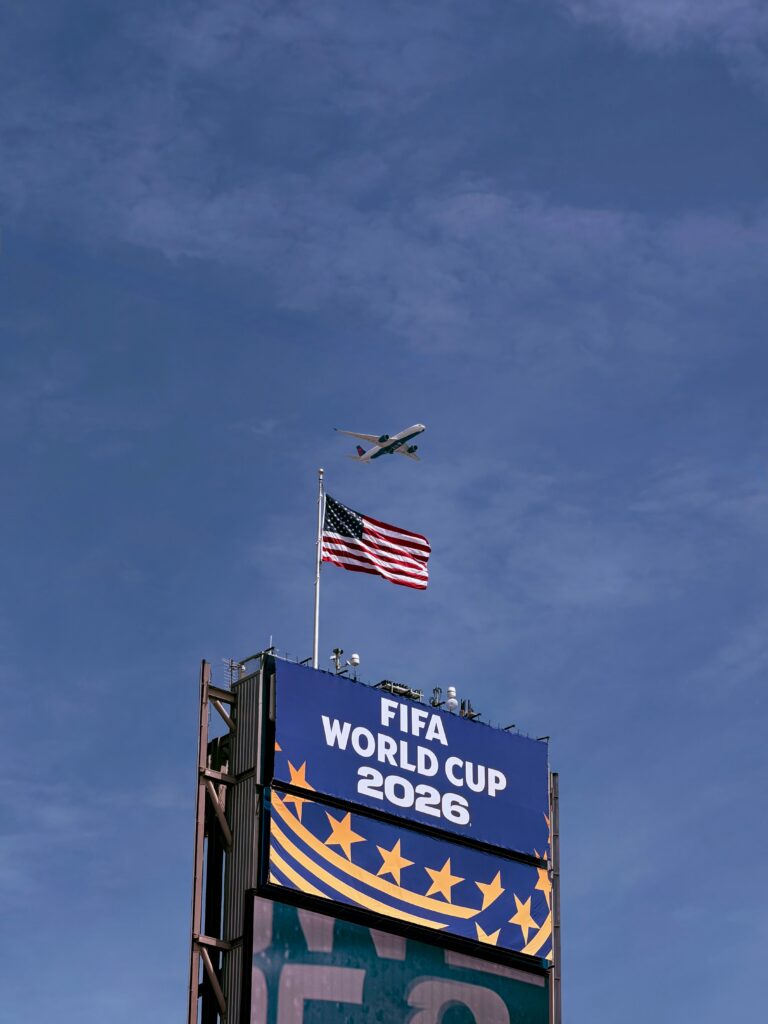
Just a few months before the start of the 2026 FIFA World Cup, the Spanish authorities, with the support of the EUIPO, Europol, Interpol and OLAF, seized more than 66,000 counterfeit shirts and sports equipment. The estimated value of the products exceeded two million euros, and the damage caused to the rightholders was estimated at more than seven million euros.
At first glance, it seems like news that concerns only major sports competitions. In fact, it is a very good example of how intellectual property works and the importance of protecting the creations that differentiate a product in the market.
More than just a t-shirt.
An official jersey of a national team is not only valuable for the material from which it is made. Its value is given by the elements that make it easily recognizable: the design, colors, emblems, names and logos associated with the competition or team.
It was precisely these elements that were reproduced without authorization in the case of the confiscated products. In other words, it was not just a clothing item that was copied, but a series of intellectual property rights that give it identity and commercial value.
The same principle applies to any business, regardless of size. A product appreciated by consumers can quickly become a source of inspiration for competitors, and without adequate protection, the differentiation achieved through investments in design and branding can be easily compromised.
Design is one of the first elements copied.
The shape of a product, the appearance of a package, the lines of a piece of furniture or the interface of an app are often the first contact between the consumer and a brand. That’s why design is also one of the first elements that end up being imitated.
Registered design protection gives the owner an exclusive right to the external appearance of the product and allows him to intervene when unauthorized copies appear.
In practice, the existence of a registration certificate is often sufficient to send a notice of cessation of infringement, without the need to initiate a dispute. If the dispute does go to court, the certificate is an important proof of the holder’s rights.
Equally important is brand protection.
In the case of the 2026 World Cup, the seized products not only reproduced the appearance of the shirts, but also elements protected as trademarks, such as the logos of sports equipment manufacturers, federation coats of arms and other distinctive signs associated with the competition and the participating teams.
The trade mark has a different role than the design. If the design protects the appearance of the product, the trademark protects the identity under which it is recognized by consumers. A brand name, logo, or other distinctive sign may become one of a company’s most valuable assets, and their use without the owner’s consent may constitute a violation of trademark rights.
In practice, the two forms of protection complement each other. A product can simultaneously benefit from design protection for its appearance and brand protection for the commercial identity under which it is offered on the market.
A trend also confirmed by the EUIPO.
The pre-World Cup operation comes as the EUIPO draws attention to the growing economic value of design and intellectual property.
According to a study recently published by the Office, 73% of European consumers are willing to pay more for products with quality design, and companies that protect their creations through intellectual property rights achieve, on average, better economic results.
Also during this period, the European Union is implementing the most extensive reform of the design legislation in the last two decades, adapting the protection system to the new realities of the digital economy. We have analyzed the main changes in a dedicated article, which you can consult here.
The news about the seizure of counterfeit equipment demonstrates that intellectual property is not a concept reserved for major sports competitions or international companies. Whether we are talking about an original design, a logo or a brand name, these elements can represent some of the most valuable assets of a business and, precisely for this reason, they are worth protecting.
If you want to find out if your product design, application interface, packaging, branding or any other distinctive element created by you can benefit from protection, the TAS Agency team can provide you with advice and assistance throughout the entire procedure.
📧 Email: office@agentiatas.ro
📞 Phone: 0745 160 163